
小鱼儿与花无缺杭州这款“会飞的救生圈”,被外交部发言人转发点赞!“未来用于挽救生命”,重9斤,可自主导航飞到落水者身边,西湖景区已部署3台_我的网站
A | 一款橙色的“救生圈”从岸边起飞,精准降落在落水者身旁,稳稳漂浮。
B | 待救援人员赶到,将穿上“救生圈”的人员救回岸上,它又原地起飞返回……最近,一款“会飞的救生圈”在网上火了,还获得了中国外交部发言人点赞。 Most missing adults are found quickly, but gaps in the system can have deadly consequences Police search for Jang Mi-ran, a 37-year-old reported missing in May, at a palm farm in Hallim-eup, Jeju Island. Jang was found dead Monday. (Yonhap)The death of Jang Mi-ran after her missing-person case was allegedly closed on false grounds has renewed scrutiny of South Korea’s system for finding missing adults.South Korea tracks missing-person reports involving adults, but ordinary adult cases are not covered by the same legal framework that allows nationwide alerts, certain forms of location tracking and DNA testing for children, people with specified disabilities and people with dementia.More than 70,000 adults were reported missing each year between 2022 and 2025. Most cases were resolved quickly, with 89.4 percent closed within a day last year and 99 percent within a month, according to National Police Agency data.Of the 70,591 adult missing-person cases closed in 2025, 931 involved people who were found dead.Jang’s case has drawn attention to what can happen when a case is closed before a missing person’s safety has been confirmed.A Jeju police officer surnamed Bu is accused of falsely telling Jang’s boyfriend and family that she was safe but did not want to be found. Police have said they found no records showing that Bu contacted her.Bu is accused of making a similar false claim in another missing-person case involving a man in his 60s, who was also later found dead.The cases have revived a long-running debate over whether police need stronger legal authority to search for missing adults, and how far those powers should extend without infringing on privacy.Gaps in adult casesJang’s cousin reportedly went to Seoul’s Nowon Police Station on July 19 to request another search for her, about two months after Bu allegedly told the family that Jang had been contacted and was safe.Nowon officials reportedly questioned whether Jang, as an adult, might simply have left voluntarily.The high rate of quick case closures has raised concern that some adult cases are treated as routine disappearances. Bu handled and closed 298 missing-person cases during roughly 17 months on a missing-person team.Meanwhile, the number of cases ending in death is not insignificant. Between 2016 and 2025, 13,639 missing adults were eventually found dead, an average of about 1,364 a year. Thousands of long-term cases also remain unsolved. Police search for Jang Mi-ran, a 37-year-old reported missing in May, at a harbor in Jeju Island. Jang was found dead on Monday. (Yonhap)Police have fewer tools in ordinary adult cases.Nationwide missing-person alerts are generally sent out only for minors, people with certain disabilities and people with dementia. Of the 3,126 people found last year under that system, 696, or 22.3 percent, were located after reports from members of the public who had seen an alert.Police searches and investigations accounted for 39.2 percent of discoveries, according to a report jointly submitted by the National Police Agency and the Ministry of Health and Welfare.Ordinary missing adults generally do not qualify for such alerts.Police have used DNA testing since 2004 to identify missing children and other eligible groups. Ordinary adult cases are not covered by the same DNA collection and comparison framework.The scale of adult disappearances is also larger. About 70,800 adult missing-person reports were filed in 2025, more than twice the roughly 29,600 involving children.Legislative pushSouth Korea enacted the Act on the Protection and Support of Missing Children and Others in 2005, establishing the legal basis for many of the search tools used today. There is no equivalent comprehensive law for ordinary missing adults.Lawmakers have made repeated attempts to fill that gap.A bill proposed in 2024 by Rep. Lim Ho-seon of the Democratic Party of Korea would establish a separate information system for missing adults and give police clearer authority to obtain location and travel information.The proposal remains pending at the National Assembly alongside similar bills.Supporters argue that broader powers could help police act more quickly when an adult is in danger. Opponents warn that the same powers could be used to track people who have deliberately chosen to leave home or cut off contact.Adults generally have the right to decide where they live and whom they remain in contact with, making the issue more complicated than cases involving children or vulnerable people.Police can already obtain location information in some cases involving signs of imminent danger. The unresolved question is whether that authority should be expanded for missing adults more broadly.。“这项技术未来将用于挽救生命。”外交部发言人林剑在海外社交平台发布视频,向全世界网友推介这款硬核“黑科技”。
C |
D | 溺水警情有时候面对的情况很复杂,再加上恶劣天气,施救者自身的安全也难以保障。”楼海锋介绍,这一系列救援装备的研发,就是希望施救者和落水者的安全都能得到保障。楼海锋自主研发的无人船空水联动救援系统,专门针对危险水域情况下的无人化救援。
E | 在无人船的“船舱”里藏着一个无人机机巢,一旦接到警情,无人机会从船上升空,利用高空视角快速搜索、精准定位。
F | 无人船则携带船体牵引装置和远程控制救援圈,靠近落水者实施远程施救。更实用的是,无人机自带高通量照明灯,夜间搜救也不再抓瞎。“这些救援装备能24小时待命,不仅提高救援效率,也给市民游客增添安全感。”楼海锋说,“会飞的救生圈”等这样的救援设备,后续也许可以在更多落水高发的点位铺开,经过一定范围的使用培训,让水上救援触手可及、更快抵达。 Current article:http://a1grg.foujiongwenruapoumeizhan.buzz/91a/an9.html Published on:03:41:18 |


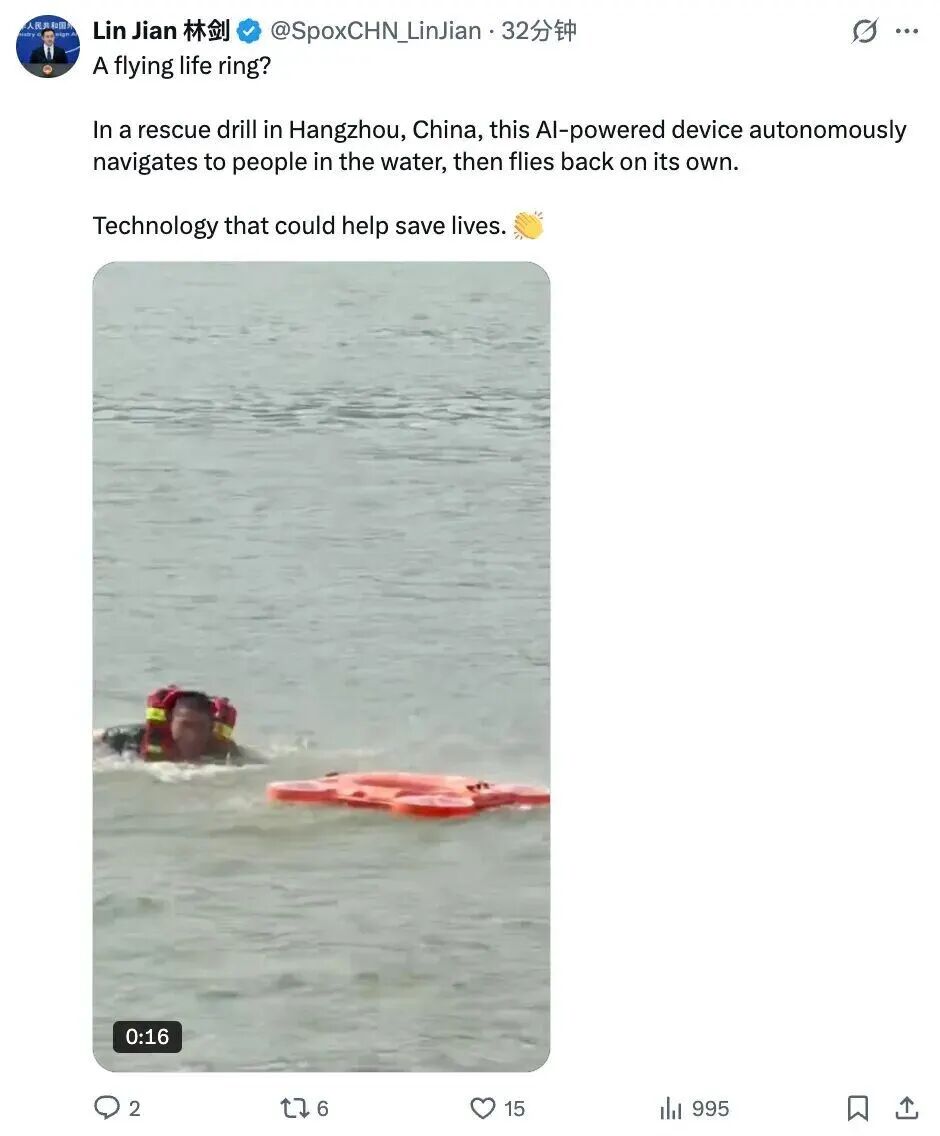 外交部发言人林剑社交平台截图被外交部发言人点赞的“会飞的救生圈”,来自杭州西湖景区公安分局。在西湖景区,已有3台“同款”随时待命。一旦有意外落水情况发生,它就能第一时间与无人车联动,比民警更快到达现场进行救援。“会飞的救生圈”可实现水空联动走进西湖景区公安分局景安“公安大脑”科技创新实验室,记者的目光立刻被一个明黄色的“救生圈”吸引住了。它的重量只有9斤,却兼具无人机飞行能力与救生浮圈浮力,能够以最快14米/秒的速度远程凌空奔赴落水人员身边,快速投送生命支撑,为水上救援抢出宝贵时间。它还内置红外夜视摄像头,即便在夜晚,后台操作人员也能实时查看前方画面,掌握落水者情况。
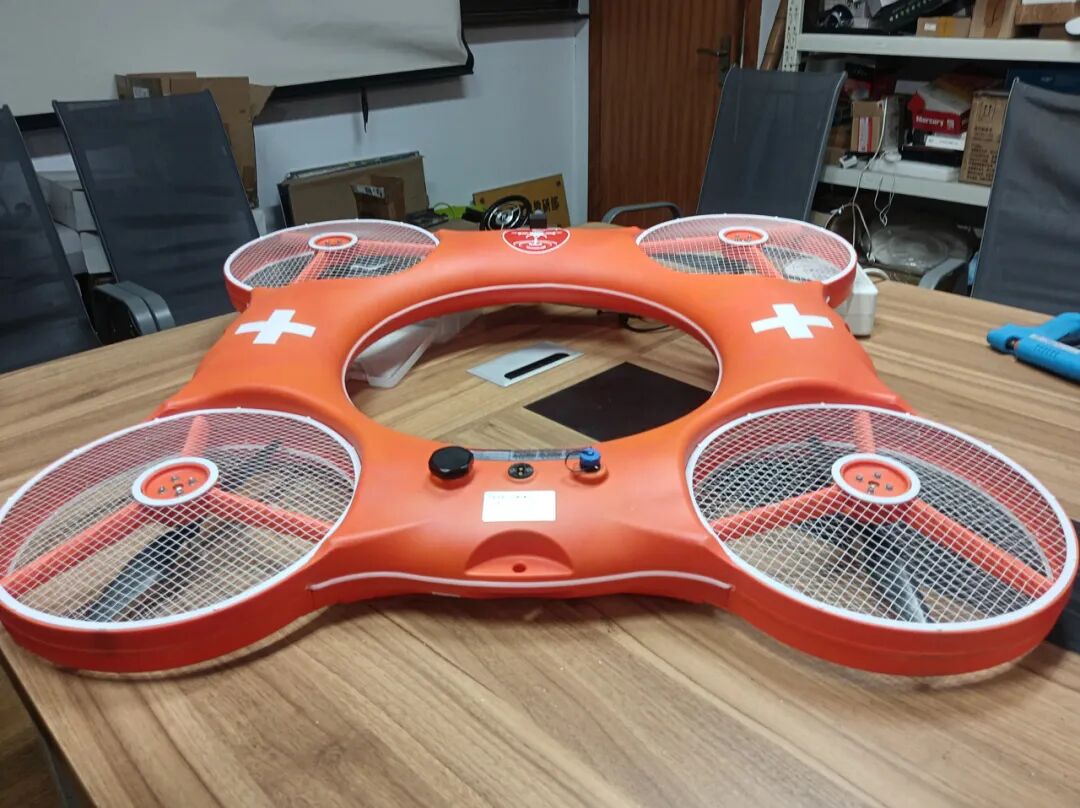 图源:景区公安这个发明的想法是怎么来的?西湖景区公安分局科信大队副大队长丁梦菲告诉记者,在日常水域救援中,最棘手的就是“预警到了,人还没到”——落水警情发生后,警力往往无法第一时间赶到涉事水域。“能不能让‘救生圈’自己飞过去?”这个有些异想天开的想法被民警田伟、丁梦菲和团队接住了。他们牵头梳理一线需求,设计“救生圈”外观,集成救援功能,并主导研发、组装。随后,合作企业接手,在性能参数优化、防水测试和封装上反复打磨,浙江理工大学计算机科学与技术学院(人工智能学院)则提供技术支持与组织功能性能测试。最终,警校企三方各展所长,把想法变成了真正能飞、能救人的装备。“在西湖景区,目前已经部署了3个。”丁梦菲说,在苏堤等落水事故多发区域进行了定点部署,警情发生时能快速响应。今年杭州首个AI警队“机警方阵”上线后,如今无人车还能够直接挂载“可飞行救生圈”,实现更快救援。“我们的小发明能被外交部发言人点赞、认可,整个团队都感觉特别荣幸,我们会继续用科技创新守护好每一位游客的安全。”丁梦菲透露,其团队正在研发水上救援推进器、陆地履带车等系列智能救援设备,在不久的将来会投入实际应用。背后的“发明天团”有更多硬核“黑科技”“会飞的救生圈”也把背后的研发团队带入大众的视野。在西湖景区公安,有这样一支“发明天团”,他们关注到日常警情中的现实困境,用技术赋能解决救援过程中的痛点。从“会飞的救生圈”到能红外探测预警的仿生鱼,还有使用率很高的智能打捞杆,都来自他们。景区分局巡特警大队副大队长楼海锋,被同事们称为“警营爱迪生”,他参与研发了不少硬核的水上救援“黑科技”。“会游泳不等于会救人。

